
If you’re planning to run online ads for your business, you’ve probably asked yourself this question: should I put my money into Google Ads or Facebook Ads? It’s one of the most common questions business owners and marketers ask, and honestly, there’s no one-size-fits-all answer. Both platforms are powerful, but they work in completely different ways.
In this article, we’ll break down how each platform works, where they shine, where they fall short, and how to decide which one (or both) is right for your business.
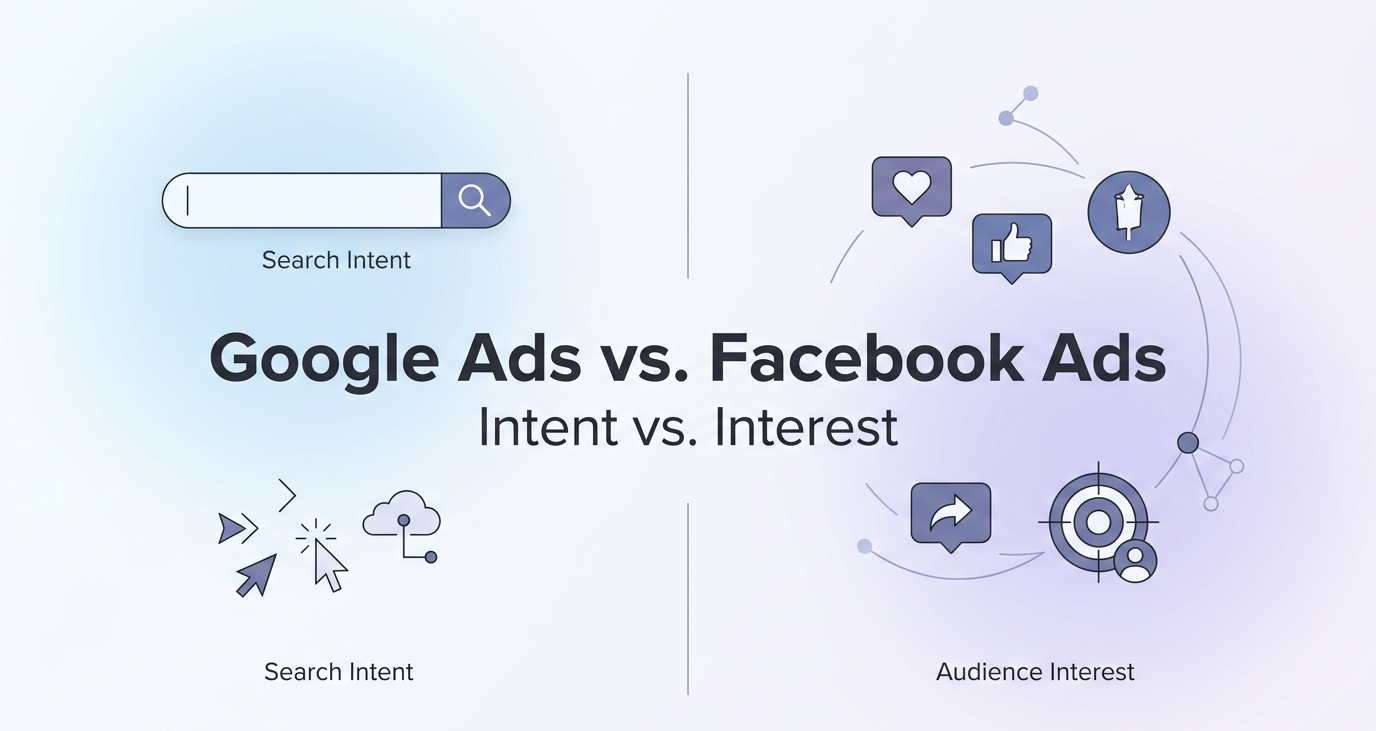
The Core Difference: Intent vs Interest
Before diving into features and costs, it helps to understand the basic difference between these two platforms.
Google Ads is about intent. People go to Google because they’re actively searching for something like a product, a service, an answer to a question. When someone types “best running shoes for flat feet,” they already know what they want. Google Ads puts your business right in front of that person at the exact moment they’re looking.
Facebook Ads is about interest and discovery. People scroll through Facebook and Instagram to check on friends, watch videos, or kill time not to shop. They’re not actively searching for anything. Facebook Ads work by interrupting that scroll with something relevant based on their interests, behavior, and demographics.
This one difference explains almost everything else about how these two platforms behave.
How Google Ads Works
Google Ads mainly runs on a pay-per-click (PPC) model through search results, though it also includes the Google Display Network, YouTube ads, and Shopping ads.
When someone searches a keyword, businesses bid to have their ad appear at the top of the results. You’re shown to people who are already looking for what you sell, which is why Google Ads tends to convert well — you’re catching people close to the buying decision.
Strengths of Google Ads:
- Captures people with high buying intent
- Great for lead generation and direct sales
- Google Shopping ads work especially well for ecommerce
- You can target based on specific keywords, so your ad matches exactly what someone is searching for
Downsides of Google Ads:
- Can get expensive in competitive industries (some keywords cost a lot per click)
- Requires ongoing keyword research and optimization
- Limited targeting based on interests or demographics compared to Facebook
- Learning curve for beginners, especially around bidding and quality score
How Facebook Ads Works
Facebook Ads (which also covers Instagram, since both run through Meta’s ad platform) works differently. Instead of targeting based on what people search for, it targets based on who they are (age, location, interests, behavior, job title, and even how they’ve interacted with your business before).
This makes Facebook Ads incredibly useful for building awareness and reaching people who don’t yet know they need your product. It’s also great for retargeting, showing ads to people who’ve already visited your website or engaged with your brand.
Strengths of Facebook Ads:
- Detailed audience targeting (interests, behaviors, demographics, lookalike audiences)
- Visually engaging ad formats (images, videos, carousels, reels)
- Generally lower cost-per-click than Google, especially in the early stages
- Excellent for brand awareness and retargeting campaigns
- Great for businesses with visually appealing products (fashion, food, beauty, etc.)
Downsides of Facebook Ads:
- Lower intent, people aren’t actively looking to buy
- Ad fatigue happens faster, so creatives need frequent refreshing
- Performance can be affected by privacy changes (like iOS tracking restrictions)
- Takes longer to see direct sales results compared to search ads
Cost Comparison
There’s no fixed answer here since costs vary by industry, competition, and location, but generally speaking:
- Google Ads tends to have a higher cost-per-click, especially for competitive keywords like “insurance,” “lawyer,” or “software,” where clicks can cost anywhere from a few dollars to over $50.
- Facebook Ads usually has a lower cost-per-click and cost-per-thousand-impressions, making it more budget-friendly for businesses just starting out with paid ads.
That said, cheaper clicks don’t always mean better results. A $1 Facebook click that doesn’t convert is more expensive in the long run than a $5 Google click that does.
Which One Is Better for Your Business?
This really depends on your goals and your industry.
Choose Google Ads if:
- You sell a product or service people actively search for (plumbers, lawyers, software, ecommerce products)
- You want faster, more direct conversions
- Your business relies on local search traffic
- You have a defined budget for high-intent leads
Choose Facebook Ads if:
- Your product benefits from visual storytelling
- You’re building brand awareness from scratch
- You want to retarget website visitors or past customers
- Your target audience is easier to define by interests than by search terms
Use both if:
Many successful businesses actually run both platforms together. Facebook builds awareness and warms people up, while Google Ads captures them when they’re ready to buy. For example, someone might see your brand on Instagram a few times, then later search for your product on Google and click your search ad, even though it was the Facebook ad that first introduced them to your brand.
Final Thoughts
There’s no universal winner between Google Ads and Facebook Ads, they simply serve different purposes. Google Ads is best when people already know what they want. Facebook Ads is best when you want to reach people before they even know they need you.
The smartest approach isn’t picking one over the other. It’s understanding your business goals, your audience, and your budget, then using each platform for what it does best. Many businesses find the biggest wins come from running both platforms together as part of one overall strategy.